By Gloria Kat, Executive Director
The Centers for Disease Control and Prevention (CDC, 2023) defines health disparities as “preventable differences in the burden of disease, injury, violence, or opportunities to achieve optimal health that are experienced by socially disadvantaged populations”
We understand that examining the data around health disparities allows us to understand the issues affecting disadvantaged populations. Unfortunately, in our county there are many residents experiencing these disparities daily, and it is sad to say that community work often goes unnoticed and uncelebrated due to the assumption that everyone has equal access to services. Just in Fort Collins and the rest of our county, disadvantaged communities face discrimination, segregation, and arbitrary practices that hinder their ability to live peaceful and fulfilling lives. Recently, Denver7 news interviewed residents of various mobile home parks in northern Colorado, objectively highlighting the daily challenges they face. You can watch the segment through this link https://www.denver7.com/news/investigations/colorados-mobile-home-crisis-residents-report-rising-rent-contaminated-water-sewage-leaks
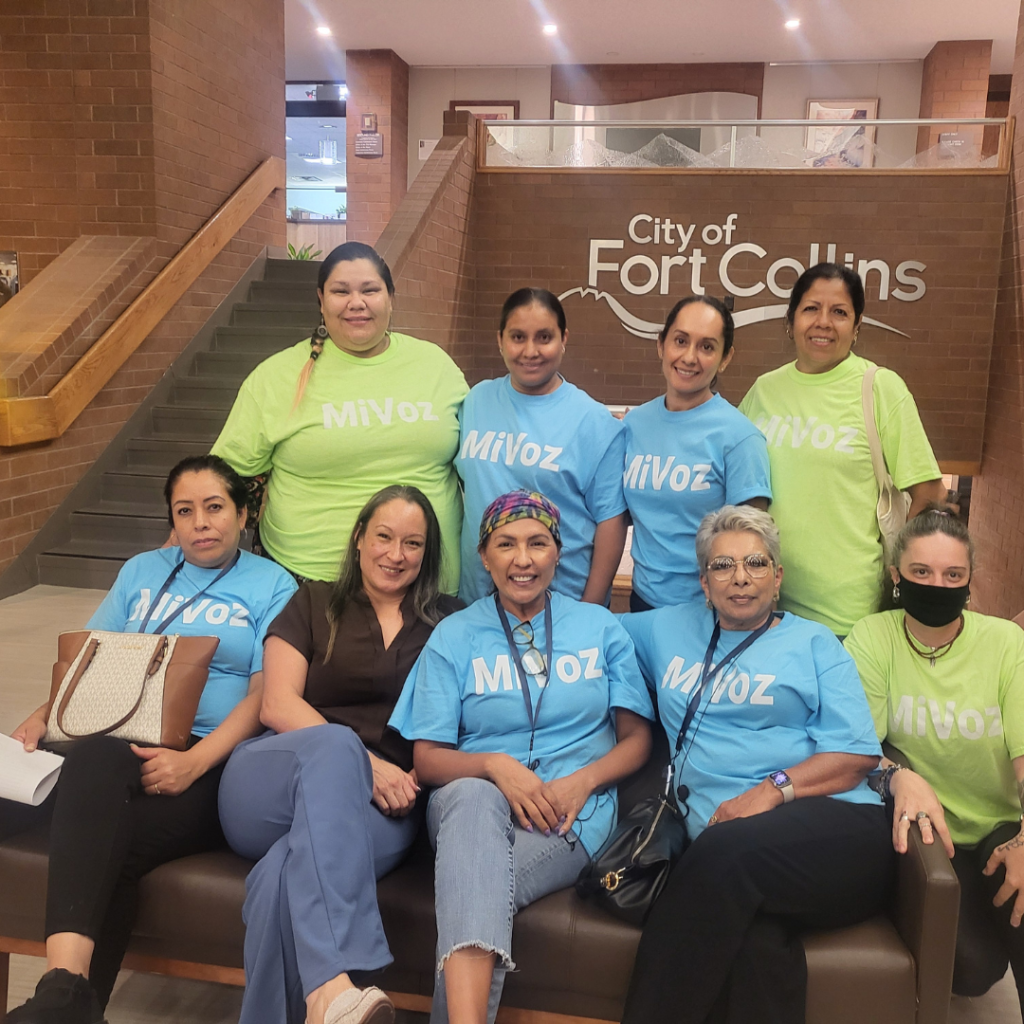
Over time, the crisis of the mobile home communities (which to this day are still one of the most affordable forms of housing) has been characterized by increases in rents of up to 45%, but these increases do not translate into better infrastructure. Residents still deal with issues like exposed drains, low water pressure, and water they do not trust to drink. Denver7 portrayed these as ongoing issues that have left the residents with unanswered questions and a great deal of frustration. To address those health disparities, a group of leaders of Mi Voz, our leadership development program, have initiated an open dialogue with the County Department of Health and Environment and the City of Fort Collins to better understand how water is distributed and regulated as they continue to experience water shortages. With support from the Colorado Water Center, hundreds of tests have been conducted and water filters installed, but the root of the problem remains unresolved. Infrastructure in parks is often lacking, and improvements typically come at the residents’ expense. Through the Mi Voz program, residents have felt empowered and have organized to tackle these issues. The leaders understand that teamwork can lead to achieving greater results.
One of Mi Voz’s goals for the next three years is to establish a Mobile Home Park Resident Council that can be recognized by local government and all relevant institutions, with active participation from residents and community leaders. Larimer County alone has forty-two mobile home parks! We know there is still work to do, and we are extremely fortunate to have the support of The Colorado Health Foundation to advance this project and provide the leaders with the necessary resources that will lead them to consolidate their efforts and form a resident-led council.
If you need additional information or would like to know more about Mi Voz, please contact Adriana Quintero at adrianaq@thefamilycenterfc.org. Adriana is truly passionate about social justice and has worked with the Latinx/Hispanic/migrant community for more than fifteen years. Let’s celebrate Community Organizing!
Gloria Kat
Executive Director/Directora Ejecutiva